






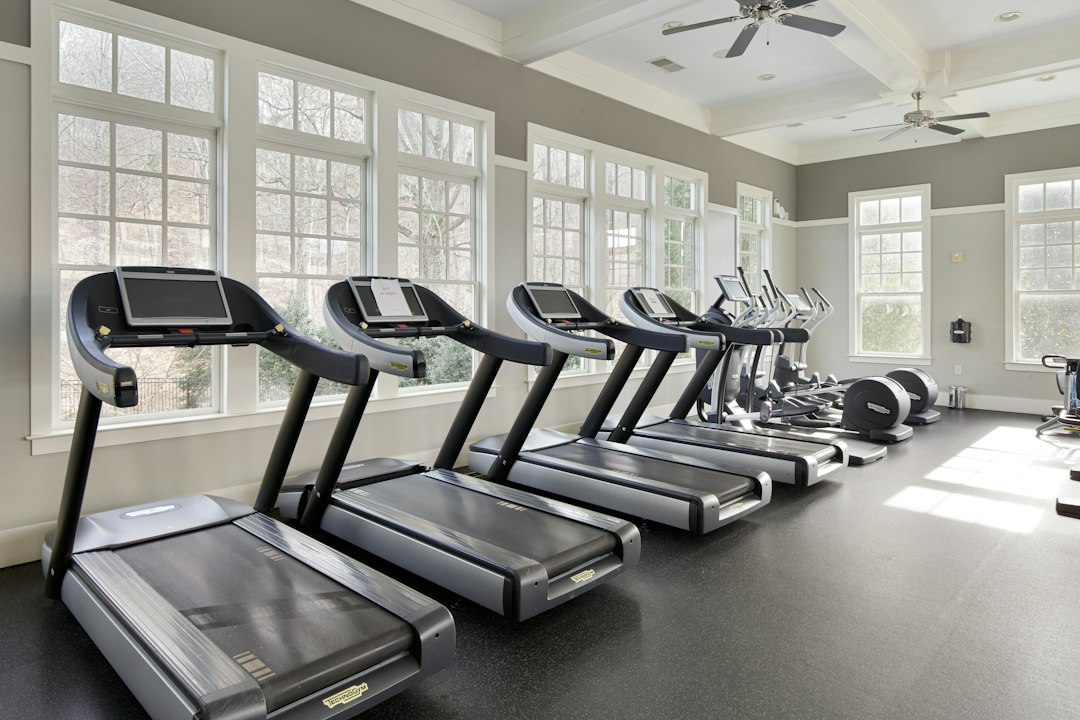
A treadmill with incline is not the same machine as a flat one with a fancier console. Tilting the belt changes which muscles do the work, how much oxygen you burn per minute, and how hard the session feels at the exact same speed on the display. Most people own the feature and never move it past 1%. This guide covers what the grade actually does, how to pick yours, and how to build a week around it. If walking is your main training rather than a supplement to running, the walking treadmill guide turns this into a full eight-week beginner program with the speeds and progressions already mapped out.
What Incline and Speed to Walk At
For most people the right starting point is 5-6 km/h (about 3.1-3.7 mph) at a 5-8% incline. That speed keeps a normal walking stride, and that grade lifts your effort well above flat walking without forcing you onto the handrails. Newer walkers sit at the low end, regular exercisers at the high end, and the 20-minute test further down narrows it to your own number.
Speed and grade trade off against each other, and grade wins at walking pace. The table below uses the walking equation from the American College of Sports Medicine (ACSM’s Guidelines for Exercise Testing and Prescription), the standard formula exercise labs use to estimate the oxygen cost of treadmill walking. Values are converted to approximate calories per hour for a 70 kg person; scale up or down in proportion to your body weight.
| Speed | 0% | 5% | 10% | 15% |
|---|---|---|---|---|
| 4 km/h (2.5 mph) | ~210 | ~340 | ~470 | ~590 |
| 5 km/h (3.1 mph) | ~250 | ~410 | ~560 | ~720 |
| 6 km/h (3.7 mph) | ~280 | ~470 | ~660 | ~850 |
Read across a row and down a column and the point is obvious. Going from 4 to 6 km/h on the flat adds about 70 kcal per hour. Adding 10% grade at 5 km/h adds over 300. Above roughly 6.5 km/h most people start walking awkwardly and would be more comfortable jogging, so when a session feels too easy, raise the grade before the speed. The equation is an estimate for steady walking with no handrail support, so treat the numbers as a comparison between settings rather than an exact burn.
What That Percentage Actually Means
Incline on a treadmill is expressed as grade: the vertical rise divided by the horizontal distance travelled, times 100. A 10% grade means you climb 10 metres for every 100 metres of belt that passes under you. It is not degrees, which is why a 15% setting looks steeper on the display than it feels underfoot. In degrees, 10% grade is roughly 5.7 degrees.
A few reference points that make the number concrete:
- 1-2% is the standard compensation for the lack of wind resistance indoors. Runners use it so an indoor pace roughly matches the same effort outdoors. If you are converting a road pace into a belt speed for that correction, the treadmill pace chart has the splits already worked out.
- 3-5% is a gentle rolling road. Walkable at normal speed, noticeable after 20 minutes.
- 6-10% is a proper hill. Most people naturally slow down here and start breathing through the mouth.
- 11-15% is steep. Walking is the only sane option for most, and form starts to break down without attention.
- Above 15% exists on some machines and is a specialist tool, not a daily setting.
Two things vary by machine and matter more than the headline maximum. First, the incline step: cheaper units jump in 1% or even 2% increments, while better ones do 0.5%, which makes finding your exact working grade much easier. Second, the transition speed: how long the motor takes to move from 2% to 12%. On a slow machine that is 25 seconds, which quietly ruins short hill intervals. If you are still shopping, both belong on your checklist alongside the usual motor and deck questions covered in the guide to choosing a treadmill for home.
What Changes in Your Body When the Belt Tilts
Flat walking is largely a calf and momentum exercise. Your foot pushes off, your body swings forward, gravity does a lot of the return. Add a gradient and the mechanics change in ways you can feel within two minutes.
Bigger muscles enter the picture. Climbing means lifting your body weight vertically on every step. That is glute and hamstring work, plus more from the quads on the way up. More muscle mass under load means more oxygen consumed, which is the whole reason a 6% grade at 5 km/h feels harder than flat walking at 6.5 km/h.
Your energy cost climbs steeply with the grade. At 5 km/h, the ACSM estimate for a 70 kg person goes from around 250 kcal per hour on the flat to around 410 at 5% and around 560 at 10%. Every extra percent of grade adds roughly the same amount, so 8% turns an easy stroll into a genuine cardio session without touching the speed dial.
Impact stays low. This is the part people underrate. At 5 km/h your feet never leave the ground at the same time, so peak joint loading stays far below running, even at 12%. That combination of high metabolic cost and low impact is exactly why incline walking survives in training plans for people who cannot run, are coming back from injury, or simply do not enjoy running.
Your ankles get a longer range of motion. Dorsiflexion increases on a gradient, which is useful mobility work for most desk-bound people and uncomfortable for anyone with tight calves or a history of Achilles trouble. If that is you, build up over three or four weeks rather than jumping to 10% on day one.
Finding Your Working Grade in One Session
Skip the generic recommendation and spend twenty minutes finding your own number. Do it fresh, not at the end of a hard week.
- Warm up 5 minutes at 4 km/h, 0-1%.
- Set 5 km/h and 5% incline. Walk 4 minutes, hands off the rails.
- Assess: can you talk in full sentences with mild effort? If yes, add 2%.
- Repeat 4-minute blocks, adding 1-2% each time, until sentences become clipped and you would rather not talk.
- The grade one step below the point where your form degrades is your working incline.
Typical landings: 5-7% for people new to structured cardio, 8-11% for regular exercisers, 12-15% for well-trained walkers or runners using it as recovery work. There is no prize for a bigger number. The grade you can hold for 40 minutes with clean posture beats the grade you can survive for eight.
Write down the result along with your speed and average heart rate. It will move upward over a month or two, and that shift is your evidence that the training is working. Treadmill Pro sets speed and incline from your iPhone and logs every session with heart rate from your Apple Watch, so you can compare this month’s working grade against last month’s without keeping a notebook by the machine.
Four Ways to Use Incline Through the Week
Once you have a number, incline stops being a setting and becomes a training variable. These four formats cover almost everything worth doing with it.
Steady grade
Your working incline, constant speed, 30 to 45 minutes. The default session. Unglamorous, repeatable, and responsible for most of the results people attribute to fancier protocols. Two or three of these per week is a complete cardio base.
Fixed protocol
A single set of numbers you never think about again. The best known is 12% at 5 km/h for 30 minutes, which works because it removes every decision from the session. It suits people who already hold 10% or more comfortably; if your working grade is lower, start there and treat 12% as a target rather than day one.
Incline intervals
Hold speed constant and move the grade instead of the belt. A clean structure:
- 5 min warm-up at 2%
- 8 rounds of: 2 min at working incline plus 3%, 2 min at working incline minus 3%
- 5 min cool-down at 1%
This is where slow incline motors become obvious. If your machine takes 20 seconds to travel between grades, stretch the intervals to 3 minutes so the transitions do not eat the work.
Long low grade
Sixty minutes at 3-5%, speed comfortable, effort conversational. Highest total energy cost of the four because of duration, and easy enough to recover from that it can sit the day after a hard session.
Rotate these rather than repeating one. If your goal is body composition, two steady-grade sessions, one interval session and one long low-grade session per week is a balanced starting split.
The Habits That Cancel Out the Grade
Incline is easy to set and easy to waste. Four things account for most of the waste.
Holding the handrails. Leaning on the rails transfers a chunk of your body weight to the frame and can cut the real workload by 20-30%. The console still shows 12% and still counts calories as if you were carrying yourself. If you need the rails to stay on at your chosen grade, the grade is too high. Drop it 2% and let go.
Leaning back to compensate. Your torso should stay roughly vertical or lean very slightly forward from the ankles, the way it would on a real hill. Leaning backwards to fight the tilt loads the lower back and takes the glutes out of the movement, which was the whole point.
Shortening the stride to a shuffle. Steep grades tempt people into tiny quick steps. Aim for a normal walking stride with the foot landing under the hip. If you cannot, the grade is beating you.
Never coming back down. Staying at your maximum grade every session produces stale calves and a stubborn plateau. Vary the grade across the week using the four formats above.
Where to Start This Week
If you have been walking flat and want the incline to start earning its keep, here is a two-week on-ramp that keeps the calves happy.
- Week 1: three sessions of 25 minutes at 5%, comfortable speed, no rails.
- Week 2: two sessions of 30 minutes at 7-8%, one session of 45 minutes at 4%.
- Week 3 onward: run the bracket test above, then build your week from the four formats.
The core idea is simple. A treadmill with incline lets you buy intensity with grade instead of speed, and grade is cheaper on your joints, easier to sustain, and far easier to progress in small honest steps. Set a number, hold your form, log it, and let the trend do the talking.