






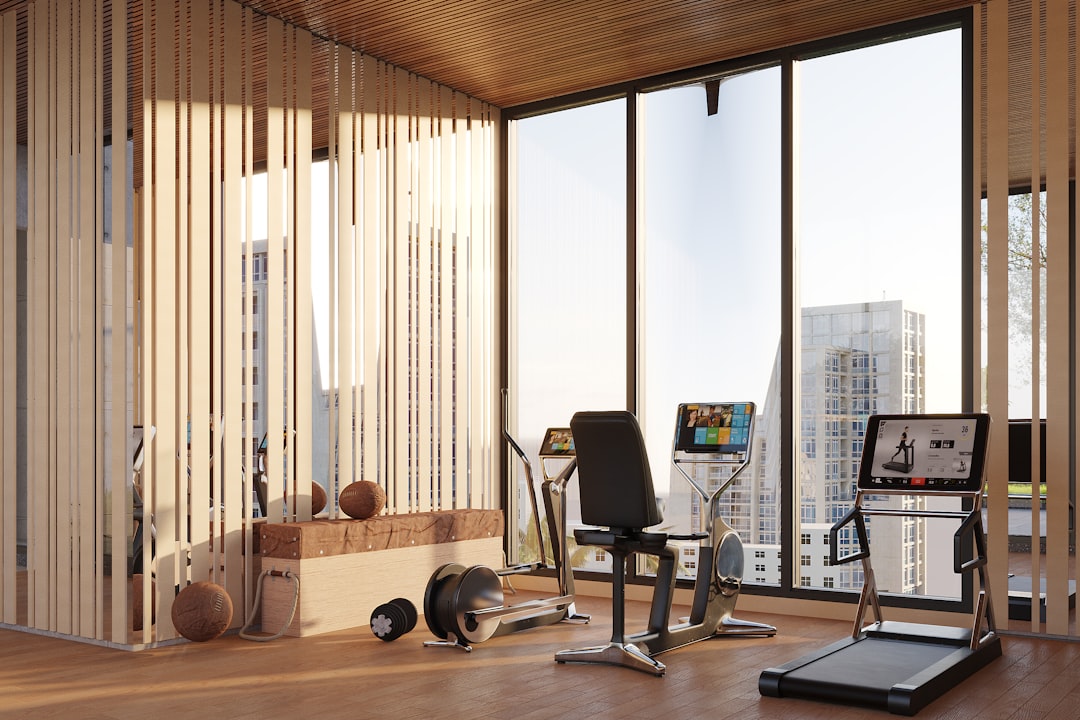
A treadmill in a flat is a negotiation with the people below you. The good news is that most complaints come from three fixable sources, and only one of them is the machine itself. This guide covers what actually transmits through a floor, the mat stack that kills most of it, the maintenance that quiets a rattling machine, and how to change your running so the treadmill stops being the loudest thing in the building.
What Your Neighbours Actually Hear
Treadmill noise splits into three types, and they need completely different fixes. Diagnose before you spend money.
- Impact noise (structure-borne). Your foot lands, the deck flexes, the frame transfers the shock into the floor slab, and the slab radiates it into the ceiling below as a thud. This is the complaint you get. It is low frequency, it travels through concrete and joists, and no amount of soft furnishing in your room will stop it.
- Vibration hum. The motor and rollers spin at a constant frequency. If the frame sits directly on a hard floor, that hum couples into the structure and becomes a constant drone downstairs. Worse in older buildings with timber joists.
- Airborne noise. Motor whine, belt friction, console fan, your breathing, the TV you turned up to drown it out. This is what you hear, it annoys people in the same flat, and it barely crosses a floor slab.
Rough priority for an apartment: impact first, vibration second, airborne last. If you attack them in that order you will solve 80% of the problem with the first purchase.
A quick test: run the treadmill empty at 6 km/h and ask someone downstairs what they hear. That isolates machine vibration from your footstrike. If empty is quiet and loaded is loud, your problem is impact and form. If empty is already audible, the machine or the mount needs work.
Build a Proper Mat Stack
A single 6 mm rubber mat under a treadmill is mostly for protecting your floor. It does very little for impact noise. What works is a layered stack that decouples the frame from the slab.
From the floor upward:
- A dense rubber base layer, 8-12 mm. Recycled crumb rubber gym flooring, the kind sold in 1 m squares. Dense mass blocks vibration transfer better than soft foam.
- A soft, resilient middle layer. High-density EVA foam tiles or acoustic underlay, 10-20 mm. This is the spring in the system. Soft alone squashes flat under 100 kg of treadmill and stops working, which is why it goes between denser layers.
- A second rubber layer or a solid plywood sheet, 12-18 mm. This spreads the treadmill’s four contact points across the whole soft layer instead of punching through it.
- Isolation pads under each foot. Anti-vibration washing machine pads or purpose-made rubber isolation feet, roughly 40-60 mm thick, placed under each of the treadmill’s feet on top of the stack.
The whole assembly should be 3-5 cm thick and extend at least 20 cm beyond the treadmill footprint in every direction. Two practical warnings: a taller stack raises your running surface, so check overhead clearance if you have low ceilings, and a stack that is too soft makes the frame feel wobbly at speed. If the console rocks when you run, add mass to the top layer rather than removing the soft layer.
Budget reality: a decent stack costs 80-200 USD in materials. That is far cheaper than replacing a treadmill, and it works on any machine you already own.
Silence the Machine Itself
A well-maintained treadmill is dramatically quieter than a neglected one. Most of the clunks, squeaks, and rising motor whine people blame on “cheap machine” are maintenance problems.
- Lubricate the deck. A dry deck makes the belt drag, the motor pull more current, and the whole machine hum louder under load. This is the single biggest quick win. Follow the process in our guide to lubricating a treadmill belt and expect a noticeably quieter motor within one session.
- Check belt tension. A loose belt slaps and shuffles; an overtightened belt loads the roller bearings and whines. You should be able to lift the belt 5-8 cm at the centre of the deck. If yours is slipping or drifting, fix that first using our belt slipping guide.
- Level the machine. Every treadmill has adjustable rear feet. On an uneven floor, one foot floats and the frame rocks with each step, which produces a rhythmic knock through the floor. Adjust until all four feet carry weight with zero rock, then re-check after the mat stack goes in, because a soft stack changes the levelling.
- Retighten frame bolts. Uprights, handrail, and motor cover bolts loosen over months of vibration. Go around with the supplied Allen key every 3 months. Half the “rattles” in home treadmills are a loose motor cover.
- Clean under the hood. Dust in the motor compartment makes the fan work harder and run louder. The rest of the routine is in our treadmill cleaning and maintenance guide.
Do all five in one afternoon. A machine that squeaks, knocks, and drones can go back to a steady low hum without spending anything.
Change How You Run, Not Just What You Run On
Your footstrike is the loudest component in the system, and it is free to change.
Increase your cadence. Most heavy-landing runners take 155-165 steps per minute. Push toward 175-180 at the same speed and your stride shortens, your foot lands closer under your hips, and vertical impact force drops noticeably. Set a metronome app to 175 BPM and run at your usual easy pace for 10 minutes to feel the difference. It will feel choppy for the first week.
Land quieter on purpose. Give yourself one instruction for a whole session: make less noise. Most people self-correct within a few minutes, softening the knee and reducing overstriding without any technical coaching.
Swap some running for incline walking. This is the biggest lever available in an apartment. Walking at 5 km/h and 10-12% incline produces a fraction of the impact of running at 10 km/h, and the cardiovascular cost is comparable for most people. Our comparison of incline walking versus running covers the trade-offs, and the 12-3-30 workout is a ready-made low-impact session that keeps your neighbours out of it entirely. If walking is new as a training tool rather than a warm-up, our walking treadmill guide lays out the first eight weeks of speeds and inclines that make it work.
Cap your top speed indoors. Impact force rises steeply above roughly 12 km/h. If you need real speed work, do it outside or at a gym and keep your indoor sessions to steady efforts and incline intervals. A phone-controlled setup helps here: with Treadmill Pro you can pre-plan speed and incline blocks and let the app drive the machine, so you stop reaching for the console and stabbing the speed-up button when a workout gets boring.
Placement and Timing
Where the treadmill sits matters more than most people expect.
- Put it over a load-bearing wall or in a corner. Floor slabs and joists flex most at the centre of a span and least near their supports. Moving a treadmill from the middle of a room to within a metre of a structural wall can cut the thud downstairs measurably.
- Do not push it against a shared wall. Frame contact with a wall turns the wall into a speaker. Leave a 10 cm gap on all sides.
- Avoid the room above a bedroom. Obvious, and worth checking with your neighbour rather than guessing at the layout.
- Agree on hours. Most residential noise rules define quiet hours roughly 22:00-07:00 or 23:00-08:00, depending on where you live. Running at 06:00 in a flat is asking for a complaint even with a perfect mat stack. Shift early sessions to 07:30 and late sessions to before 21:30.
- Talk to the neighbour first. A two-minute conversation and a “tell me if it gets bad” is worth more than any rubber mat. People tolerate a known, predictable noise far better than a mystery one.
Buying for Quiet
If you are still shopping, some machines are quiet by design and no mat stack will rescue the wrong choice.
- Motor. Larger continuous-duty motors run at lower RPM for the same belt speed, which means less whine. Look for 2.5 CHP or more if you run, 2.0 CHP is fine for walking. A small motor screaming at its limit is one of the loudest things in a flat.
- Drive type. Belt-driven motors are quieter than chain-driven. Most modern home units are belt-driven, but budget machines vary.
- Deck cushioning. Elastomer cushions under the deck absorb impact before it reaches the frame. Machines advertising multi-zone or variable cushioning genuinely do transmit less.
- Frame mass. Heavier machines vibrate less. A 45 kg treadmill and a 110 kg treadmill behave very differently on a timber floor.
- Walking pads. Low-profile walking pads are the quietest option in the category because they have small motors, low speeds, and no running-height frame to resonate. If your real goal is daily movement rather than running, read our portable treadmill guide before buying a full-size machine you will mostly walk on.
Our broader checklist for what to look for when buying a treadmill for home covers the rest of the specification, but for apartments, order your priorities as: cushioning, frame mass, motor size, then everything else.
Where to Start
Work in this order, because each step is cheaper than the next and often makes it unnecessary:
- This week: lubricate the belt, check tension, level the feet, tighten every bolt. Cost: one bottle of silicone.
- This week: run empty and have someone listen from below, so you know whether you are fighting vibration or impact.
- Next payday: build the layered mat stack with isolation pads under the feet.
- Ongoing: raise your cadence toward 175-180 and move two of your weekly sessions to incline walking.
- If still a problem: move the machine closer to a load-bearing wall, and lock your indoor sessions to sensible hours.
Most people never get past step three. A maintained machine on a proper stack, run at a sane cadence, is quieter than a washing machine on spin cycle, and that is a standard your neighbours already live with.