






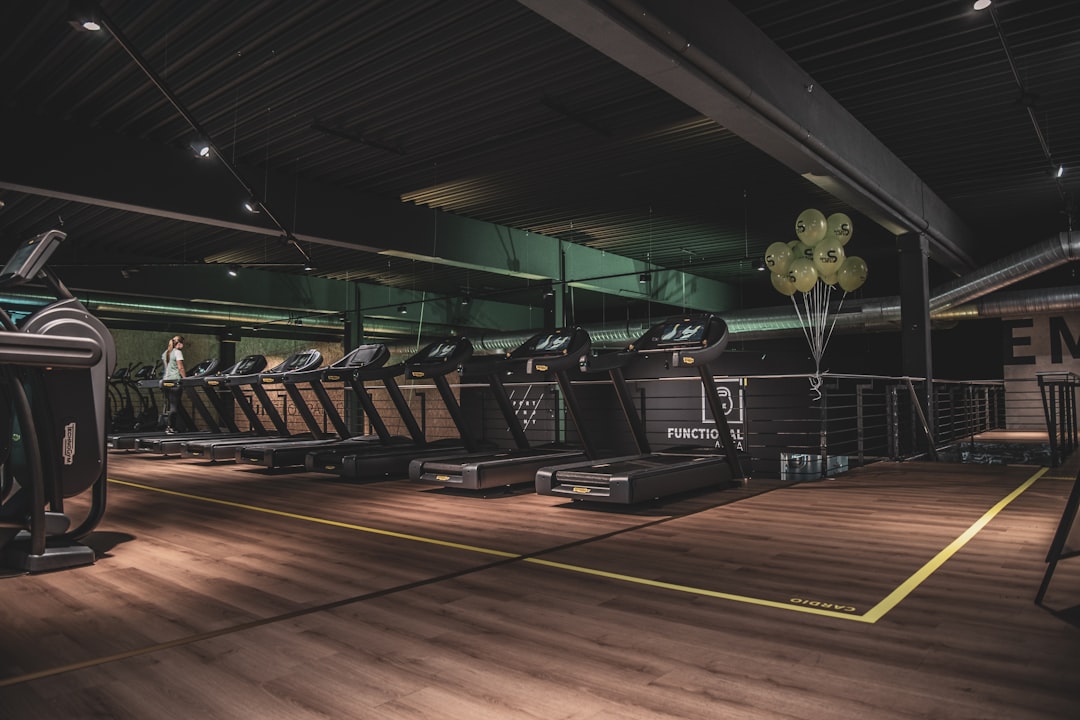
You can already run 5 km. The problem is that you have been running it at roughly the same speed for months, because three easy runs a week produce exactly one kind of fitness. This 8-week plan fixes that with four sessions a week, four defined paces, and a treadmill that holds every one of them to the tenth of a km/h. Expect 60 to 120 seconds off your 5K by week 8.
Who This Plan Is For
This is the intermediate block, not the on-ramp. Before week 1 you should:
- Run at least 3 times per week and have done so for 3 months or more.
- Cover 20-30 km per week comfortably.
- Have a recent 5K time somewhere between 22:00 and 32:00, or be able to run 5 km continuously without walk breaks.
- Be free of any pain that changes how you run.
If you are not there yet, the Couch to 5K treadmill plan builds continuous running from scratch, and the beginner treadmill workout plan covers the first month of structure. Both feed directly into week 1 here.
One setting applies to every run below: incline at 1%. Flat belt running is slightly easier than road running because you are not pushing through air, and 1% restores the honest effort. Interval sessions that call for a steeper grade say so explicitly.
Your Four Paces
Everything is anchored to your current 5K speed, not your goal speed. Work it out from your most recent honest 5 km: 32:00 is 9.4 km/h, 30:00 is 10.0 km/h, 27:30 is 10.9 km/h, 25:00 is 12.0 km/h, 22:30 is 13.3 km/h. Call that number P5. Then set four speeds:
- Easy (E): P5 minus 2.5-3.0 km/h. Full sentences, quiet breathing. For a 25:00 runner that is 9.0-9.5 km/h. It will feel too slow. That is correct.
- Threshold (T): P5 minus 0.8-1.0 km/h. Comfortably hard, sustainable for about 40 minutes if you had to. This is the single most productive pace for a 5K.
- 5K pace (P5): your current race speed exactly. Rehearsing it on the belt is the whole reason this plan works.
- Interval (I): P5 plus 0.5-0.8 km/h. Hard, repeatable across every rep. If your last rep is slower than your first, you set this too high.
Do not build the plan on the time you wish you could run. Train off what you can run today, retest at the end, and the numbers move on their own. If you use a watch or chest strap, cross-check: easy runs sit in zone 2, threshold work in low zone 4, intervals in zone 5. Our guide to Apple Watch heart rate zones on the treadmill covers setting those thresholds properly. When pace and heart rate disagree on a given day, believe the heart rate.
The Weekly Template
Four runs, three rest days, same skeleton every week:
- Tuesday - VO2max intervals. Short, fast reps at I. The session that raises your ceiling.
- Thursday - Threshold work. Continuous tempo or long cruise intervals at T. The session that raises your floor.
- Saturday - Long easy run. 55-75 minutes at E. Nothing fancy, and the first thing people wrongly skip.
- Sunday - Recovery run or incline walk. 30-35 minutes at E, or 40 minutes walking at 5.5 km/h and 8-10% incline if your legs are heavy.
Every session gets a 10-minute warm-up (5 minutes walking at 5.5 km/h, 5 minutes easy jogging) and a 5-minute cool-down walk. The structures below describe the middle block only.
Two hard days a week is the ceiling at this level. A third one does not produce a third adaptation, it produces a stress fracture in week 6.
Weeks 1-3: Build the Engine
The first block is deliberately unglamorous. Volume climbs, the intervals stay short, and threshold work builds from 15 to 24 minutes.
- Week 1. Tue: 8 x 400 m at I, 90-second easy jog between reps. Thu: 15 minutes continuous at T. Sat: 55 minutes at E. Sun: 30 minutes recovery.
- Week 2. Tue: 6 x 600 m at I, 2-minute jog recoveries. Thu: 3 x 6 minutes at T, 90-second jog between. Sat: 60 minutes at E. Sun: 30 minutes recovery.
- Week 3. Tue: 10 x 400 m at I on 2% incline, 90-second recoveries. Thu: 20 minutes continuous at T. Sat: 65 minutes at E. Sun: 35 minutes recovery.
Two things matter more than the numbers. First, hold the easy runs genuinely easy: the most common intermediate failure is running Saturday at threshold effort and arriving at Tuesday’s intervals already cooked. Second, keep interval recoveries at a jog, not a walk. Jogging recoveries keep the heart rate elevated and make the session do what it is supposed to do.
Punching a new speed into the console every 400 metres for ten reps is where treadmill interval sessions fall apart. With Treadmill Pro you drive speed and incline from your iPhone and every rep is logged automatically, so an 8-week block turns into a training history you never had to write down.
Weeks 4-6: Sharpen at Race Pace
Week 4 is a cutback: cut every session roughly in half and resist the urge to add anything back. Weeks 5 and 6 are the hardest of the plan, and they are where race pace becomes a habit rather than an event.
- Week 4 (cutback). Tue: 5 x 400 m at I. Thu: 12 minutes at T. Sat: 45 minutes at E. Sun: 30 minutes recovery.
- Week 5. Tue: 5 x 1000 m at P5, 2-minute jog recoveries. Thu: 2 x 12 minutes at T, 3-minute jog between. Sat: 70 minutes at E. Sun: 35 minutes recovery.
- Week 6. Tue: 6 x 800 m at I, 90-second recoveries. Thu: 25 minutes continuous at T. Sat: 75 minutes at E with the last 10 minutes at T. Sun: 35 minutes recovery.
Week 5’s Tuesday session is the plan’s centrepiece: 5 km of work at exactly your race speed, broken into pieces you can hold. It rehearses the pace, the breathing, and the arm carriage without the fatigue of a full race. If rep 4 or 5 falls apart, your P5 is set 0.3-0.5 km/h too high. Adjust it down and keep going, because a plan built on an honest number beats a plan built on an aspirational one.
For variety inside the threshold block, a treadmill pyramid workout can replace one Thursday session without changing the training stress much.
Weeks 7-8: Peak and Time Trial
Volume drops. Intensity stays. This is a taper, not a rest week, and it is the phase runners most often ruin by adding “just one more” hard session.
- Week 7. Tue: 4 x 1000 m at P5, 2-minute recoveries. Thu: 2 x 8 minutes at T. Sat: 55 minutes at E. Sun: 30 minutes recovery.
- Week 8 (race week). Tue: 6 x 400 m at P5 plus 0.5 km/h, full 2-minute recoveries. Thu: 20 minutes easy with 6 x 30-second strides. Sat: 5K time trial. Sun: 30 minutes very easy.
Race week should leave you feeling twitchy and slightly undertrained. That feeling is a correctly executed taper, not lost fitness.
Running the Time Trial
The belt makes the 5K time trial cleaner than any road race, provided you set it up properly:
- Warm up fully. 10 minutes easy jogging, then 4 x 30-second strides at race speed with a minute walking between. A 5K is short enough that a cold start costs you 15 seconds you never get back.
- Set the console to 5.0 km in distance mode. Incline 1%, no changes mid-run.
- Start at your training P5, not faster. The first kilometre feeling easy is the goal, not a sign you should speed up.
- Hold pace to 3 km. This is the ugly middle. Do not touch the speed button.
- Raise the speed by 0.3 km/h at 3.5 km, and again at 4.5 km. A negative split is worth more than a heroic first kilometre every single time.
- Point a fan at your torso. Indoor heat build-up is the biggest difference between belt and road 5K times, and airflow is worth roughly 0.5 km/h of perceived effort.
Log the result and compare it against week 1. Then set your new P5 from the trial time, not from your old number.
Mistakes That Flatten the Curve
- Running easy days at moderate pace. The classic intermediate trap. Moderate is fast enough to accumulate fatigue and slow enough to build nothing.
- Setting P5 from a goal instead of a result. Every session downstream inherits the error, and the whole block turns into a series of failed workouts.
- Skipping week 4. The cutback is where the previous three weeks actually turn into fitness.
- Adding a fifth run. If you have extra time and energy, put it into sleep or a treadmill strength and cardio hybrid workout on a rest day, not into a fifth run.
- Leaving the incline at 0%. You will train a fitness level that does not transfer outdoors.
What to Do Next
Eight weeks, four runs a week, one honest pace at a time. When the time trial is done, pick a direction:
- Repeat the block with your new P5. A second cycle is usually worth another 45 to 90 seconds.
- Hold the fitness with one interval session and one threshold session per week while you enjoy the easy runs for a month.
- Go longer. The same pace discipline scales up: the 12-week treadmill marathon prep plan is the next distance.
Whichever you choose, keep the sessions logged in Treadmill Pro and synced to Apple Health. Eight weeks from now, the only thing more convincing than a faster 5K is the chart showing exactly how you got there.