






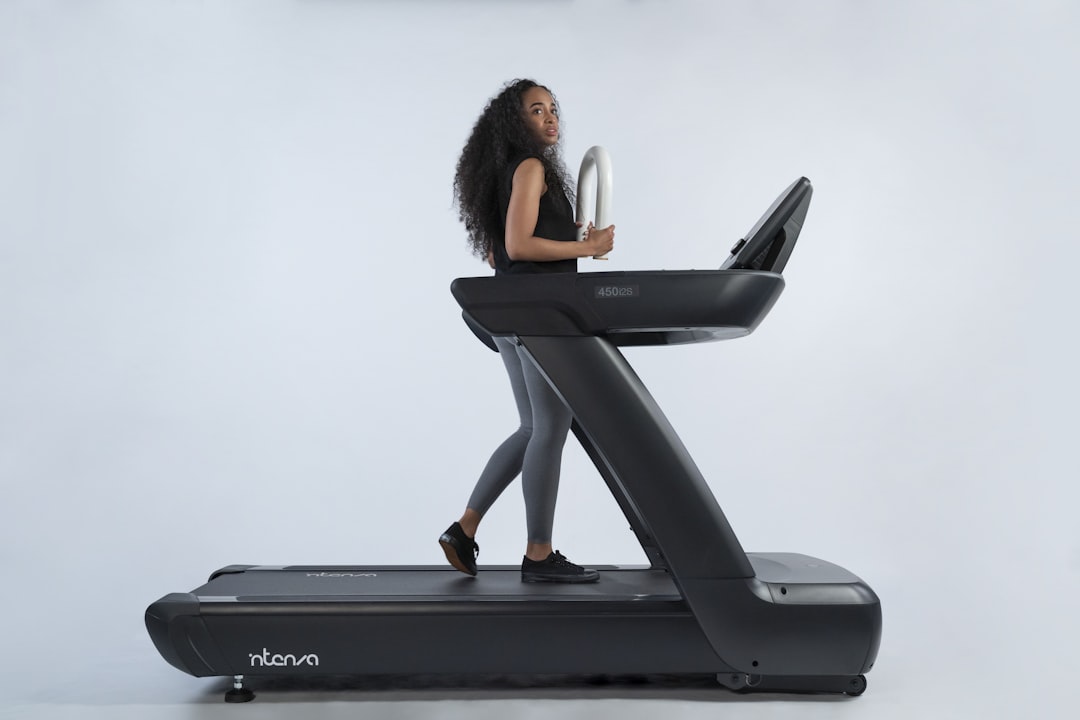
The 12-3-30 workout is the rare viral fitness trend that holds up under scrutiny: set the treadmill to 12% incline, walk at 3 mph (about 4.8 km/h), and keep going for 30 minutes. That’s the whole protocol. It went viral because it is simple, but it stuck around because it works. This guide covers what is actually happening physiologically, who should use it, where it falls short, and how to progress it once the standard version stops being hard.
What 12-3-30 Actually Is
The numbers stand for the three treadmill settings:
- 12 - incline set to 12%
- 3 - speed set to 3 mph, which is 4.8 km/h on a metric treadmill
- 30 - duration of 30 minutes, walking continuously
No intervals, no speed changes, no incline pyramid. You set the machine once and hold the effort. For a 70 kg person, a full session burns roughly 250-320 kcal, which is comparable to jogging at 8-9 km/h for the same duration, at a fraction of the joint stress.
Two practical notes before your first attempt:
- Do not hold the handrails. Gripping the rails at 12% incline can cut the effective workload by 20-30% and wrecks your walking posture. If you cannot complete 30 minutes without holding on, lower the incline until you can.
- Warm up first. Going from standing to 12% cold is rough on the calves and Achilles tendons. Walk 3-5 minutes flat at 4 km/h, then raise the incline 2-3% every 30 seconds until you reach 12%.
Why It Works
Walking at a steep grade recruits the glutes, hamstrings, and calves far more than flat walking. Larger muscle mass working means more oxygen consumed and more energy spent, without needing to run. We broke down the full comparison in incline walking vs. running, but the short version: at a steep enough incline, a brisk walk can burn as much as a moderate flat run.
The other half of the equation is intensity. At 12% and 4.8 km/h, most people land at 65-80% of max heart rate. That is squarely in Zone 2 to low Zone 3: hard enough to drive cardiovascular adaptation and meaningful calorie burn, easy enough to sustain for 30 minutes without dreading the session. If you train with a chest strap or Apple Watch, our guide to heart rate zones on the treadmill shows how to confirm you are in the right range rather than guessing.
Three properties make it genuinely useful as a repeatable training tool:
- Low impact. There is no flight phase in walking, so the landing forces are a fraction of running. Knees, hips, and shins tolerate it well, even 5 days a week.
- Low skill. No pacing decisions, no interval timing, no technique to learn. It is very hard to do it wrong.
- Repeatable. Because it does not generate much muscle damage or nervous system fatigue, you can do it the day after a hard leg workout or a long run without compromising recovery.
Who Should Use It (and Who Shouldn’t)
12-3-30 is a strong default for:
- Beginners who want a structured cardio habit without running. It pairs well with a broader beginner treadmill plan as the steady-state component.
- People losing weight who need high weekly calorie burn from a workout they can actually repeat 4-5 times a week without injury.
- Lifters who want cardio that will not interfere with leg day recovery.
- Runners on easy days who want aerobic volume without more impact.
It is the wrong primary tool for:
- Anyone training for a race. Walking at incline does not develop running economy or speed. Runners should treat it as supplemental volume, not a substitute for running.
- People chasing VO2 max. Steady Zone 2 work builds the aerobic base, but pushing your ceiling requires harder intervals. If that is the goal, look at HIIT without running or classic interval formats.
- Tight calves or Achilles issues. A 12% grade loads the calf-Achilles complex heavily. Start at 6-8% and build up over 2-3 weeks.
The Honest Limitations
Coaches like 12-3-30 more than they like how it is marketed. Three corrections to the social media version:
It is not a fat-loss hack. It burns roughly 250-320 kcal per session for most people. That is good, but it is not magic, and it does not “target belly fat” - no exercise does. Fat loss still comes down to a sustained calorie deficit, and a walking protocol is simply one of the most sustainable ways to contribute to it. For the bigger picture, see our treadmill weight loss plan.
The fixed numbers fit nobody perfectly. 12% at 4.8 km/h might be a brutal effort for an untrained 60-year-old and a warm-up for a fit 25-year-old. The settings are a starting point, not a prescription. The right dose is the incline and speed that puts you at 65-80% of max heart rate.
Doing only this will plateau. Your body adapts to any unchanging stimulus within 6-10 weeks. The session that once pushed your heart rate to 75% of max will eventually leave it at 62%, and progress stalls. The fix is progression, which is the next section.
Scaling It Up or Down
Treat 12-3-30 as a template with three dials. Change one at a time.
If the standard version is too hard:
- Start at 8-2.5-20: 8% incline, 4 km/h, 20 minutes.
- Each week, add either 1% incline or 5 minutes, not both.
- You should reach the full 12-3-30 in 4-6 weeks. There is no prize for getting there faster with terrible posture and a white-knuckle grip on the rails.
If the standard version is too easy:
- Speed first: move from 4.8 to 5.5, then 6.0, then 6.4 km/h at the same 12%. Walking at 6.4 km/h on a 12% grade is legitimately hard.
- Then duration: extend to 40-45 minutes at your current settings.
- Then incline: if your treadmill goes to 15%, use it, but only after speed and duration progressions are exhausted. Very steep grades at slow speeds tend to degrade walking mechanics.
A 4-week progression for someone who finds the classic version moderately hard:
- Week 1: 12% / 4.8 km/h / 30 min, 3 sessions
- Week 2: 12% / 5.0 km/h / 30 min, 3-4 sessions
- Week 3: 12% / 5.0 km/h / 35 min, 3-4 sessions
- Week 4: 12% / 5.3 km/h / 35 min, 3-4 sessions
The principle: small, single-variable increases that keep your heart rate in the target zone as your fitness improves.
Making the Sessions Less Tedious
The biggest real-world problem with 12-3-30 is boredom, and the second biggest is consistency tracking. A few things that help:
- Anchor it to something. A podcast episode or a show is almost exactly one session. Only allowing yourself that content on the treadmill is a surprisingly effective habit glue.
- Track every session. Progress in steady-state cardio is invisible day to day and obvious month to month, but only if you have the data. With Treadmill Pro you can control speed and incline from your iPhone, watch your heart rate live, and have every session synced to Apple Health automatically, so the downward drift of your average heart rate at the same settings - the clearest sign the protocol is working - is right there in your history.
- Vary one session a week. Keep 2-3 sessions as pure 12-3-30, and make one a variation: an incline pyramid, a flat brisk walk, or intervals. It keeps the habit fresh without abandoning the structure.
The Bottom Line
12-3-30 earned its reputation: it is a low-impact, low-skill, highly repeatable protocol that puts most people in an effective training zone for a meaningful calorie burn. Treat the numbers as a starting template rather than gospel, progress one variable at a time when it gets easy, and pair it with strength training and sensible eating if fat loss is the goal.
Next steps:
- New to treadmill training? Build the habit with the 4-week beginner plan and fold 12-3-30 in as your steady-state days.
- Want to understand the walking-vs-running tradeoff in depth? Read incline walking vs. running.
- Ready to add intensity? One weekly session from our no-running HIIT guide complements 12-3-30 well.