






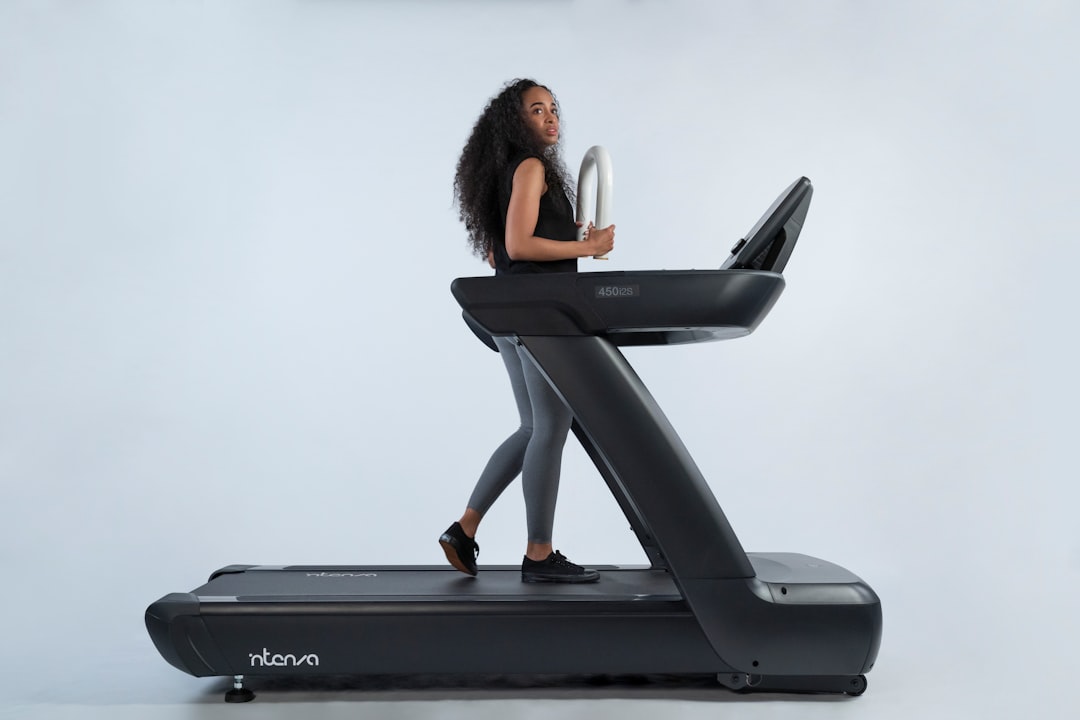
Ask most people which burns more calories - walking or running - and they will say running without hesitation. And on a flat surface, they are right. But add a significant incline, and the calculus shifts in ways that surprise even experienced gym-goers.
This post breaks down the real numbers, explains the physiology, and tells you exactly when to walk uphill vs. when to run flat.
The Basic Math
Calorie burn on a treadmill depends on three variables: body weight, speed, and grade (incline).
At a 0% grade:
- Walking at 5 km/h burns roughly 210–240 kcal/hour (for a 70 kg person)
- Running at 9 km/h burns roughly 560–620 kcal/hour
That’s a clear win for running. But watch what happens with incline:
| Activity | Speed | Incline | kcal/hour (70 kg) |
|---|---|---|---|
| Walking | 5 km/h | 0% | 225 |
| Walking | 5 km/h | 5% | 340 |
| Walking | 5 km/h | 10% | 470 |
| Walking | 5 km/h | 15% | 610 |
| Running | 9 km/h | 0% | 590 |
At 15% incline and 5 km/h, a brisk walk burns more than running flat at 9 km/h. That is not a rounding error - it is a fundamentally different activity.
Why Incline Changes Everything
When you walk on a gradient, your body recruits your glutes, hamstrings, and calves far more aggressively than flat walking. These are large muscle groups. More muscle mass working = more oxygen consumed = more energy spent.
At the same time, you remain in a lower-intensity zone. Your heart rate at 5 km/h / 10% incline will be in the 65–75% of max HR range for most people - squarely inside the “fat-burning zone” where a higher proportion of energy comes from fat oxidation vs. glucose.
Running at 9 km/h pushes you above 80% max HR for most people, where the body shifts toward burning more glycogen (carbohydrate) for fuel. You burn more total calories, but a smaller percentage comes from fat stores.
Who Should Prioritize Incline Walking
Incline walking is the better primary tool for:
- Beginners - it builds cardiovascular fitness and burns significant calories without the joint stress of running
- People with knee or hip issues - no impact phase means dramatically less load on joints
- Anyone doing extended cardio (45–90 min) - walking uphill is sustainable for much longer
- Supplemental cardio on strength training days - won’t compromise leg recovery the way running does
Running remains superior for:
- Time efficiency - higher calorie burn per minute at moderate intensities
- Cardiovascular conditioning - develops VO2 max faster
- Race training - specificity matters
How to Structure an Incline Walk Session
A high-quality 45-minute incline walking session:
- 0–5 min: Flat walk at 4 km/h, 0% (warm-up)
- 5–10 min: 4 km/h, ramp incline up 2% every 60 seconds to 10%
- 10–35 min: 4.5–5 km/h, 10–12% incline (hold this)
- 35–40 min: Reduce incline by 2% every 60 seconds back to 0%
- 40–45 min: 3.5–4 km/h, 0% (cool-down)
This is a straightforward protocol, but staying on top of the incline changes manually is tedious. Using Treadmill Pro on your iPhone, you can adjust speed and incline directly from the screen and track distance, calories, and heart rate (via Apple Watch) in one place - so you can focus on the walk, not the buttons.
Combining Both for Maximum Effect
The most effective program for fat loss combines both tools:
- 2 sessions/week: Incline walking (40–60 min at 10–15%)
- 2 sessions/week: Running intervals or steady-state running (see our HIIT guide)
- 1 session/week: Long easy run or walk (45–60 min, conversational pace)
If you are just starting out, the 4-week beginner plan builds the base you need before ramping up incline intensity.
A Note on “The 12-3-30”
You may have heard of the viral “12-3-30” protocol: 12% incline, 3 mph (4.8 km/h), 30 minutes. The reason it spread is that it works - 30 minutes at those numbers burns roughly 300 kcal for a 70 kg person, with minimal impact and manageable effort.
It is a solid starting point, but do not be afraid to deviate. 10% at 5 km/h for 45 minutes is harder and burns more. 15% at 4 km/h is brutal and extremely effective. Experiment and track your numbers.
Bottom Line
Flat-pace running burns more calories per minute than incline walking. But incline walking at serious grades (10–15%) competes directly with moderate-intensity running in total calorie and fat burn, at a fraction of the joint load and perceived effort.
The best approach is not to choose one - it’s to use both intelligently. Add incline walks to your weekly rotation and watch your results change.